As autumn arrives, many regions begin the harvest, storage, and agricultural input transfer phase. Farm work involves more than just harvesting; grains, feed, hay bales, and palletized goods require frequent loading, unloading, and transfer.
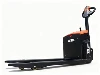
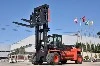
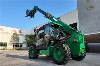
Because the handling distance, operating height, and type of goods are not fixed, ordinary forklifts are suitable for palletized goods handling on flat ground. However, in farms, warehouses, or material yards, ground conditions and operating locations vary considerably, making telescopic forklifts particularly effective.
Hay Bale Handling
Autumn is a crucial time for storing hay and feed in many regions. Round and square hay bales are heavier and require different stacking heights. Telescopic forklifts can be equipped with appropriate attachments based on the size and weight of the bales for loading, unloading, stacking, and in-yard transfer.
Agricultural Input and Palletized Goods Loading and Unloading
Seeds, fertilizers, feed, and other agricultural inputs are typically palletized. The frequency of these goods entering and leaving warehouses increases significantly before and after the harvest season.
Telescopic forklifts can handle palletized goods. When operating at warehouse entrances, next to trucks, or in outdoor storage yards, vehicles do not need to rely entirely on the indoor forklift operating environment. This is particularly useful for farms that need to repeatedly move goods between warehouses and outdoor areas.
Grain and Bulk Material Transfer
Some agricultural scenarios also require the handling of grains, cereals, or other bulk materials. Depending on the type of material, different attachments, such as buckets, can be used for loading and transferring.
However, the choice of attachments will affect the equipment's operational capacity. The actual load-bearing capacity of the same telescopic boom forklift is not exactly the same when using the forks and when using the bucket. Material density, load capacity, and operating distance all need to be matched with the equipment parameters; one cannot simply look at the capacity of the attachment itself.
Autumn Operations Equipment Selection Also Requires Consideration of Site Conditions
When agricultural users select telescopic boom forklifts, they cannot only look at the maximum load capacity. What needs to be moved, how far it needs to be moved, how high it needs to be stacked, whether the ground is level, and how long it will be used each day-all these factors will affect the final equipment configuration.
For example, the requirements for attachments and overall vehicle performance differ depending on whether the primary task is handling bales and palletized goods versus primarily loading bulk materials. If the work site is frequently muddy, gravel roads, or unpaved areas, the vehicle's mobility and tire configuration must be carefully considered.
Autumn agricultural operations are often completed within a short period, so the equipment's ability to quickly adapt to different tasks directly impacts on-site efficiency. Telescopic boom forklifts are not just for "carrying goods"; their greater value lies in their ability to handle multiple tasks with a single unit. For farms and agricultural storage scenarios that require handling various materials, this flexibility is often more important than any single parameter.