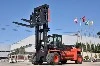
When designing a forklift's wheel configuration, the load-bearing capacity of the front axle is an important consideration. As the forklift's rated capacity increases, the load on the front axle during material handling also increases significantly. To meet the demands of heavy-duty operations, some large forklifts use a dual front-wheel design. By adding more tires, this configuration helps distribute the load and meet the requirements for tire load capacity and ground support.
So, what are the specific benefits of a dual front-wheel design?

1. Distributing Tire Loads
When a forklift handles cargo, the entire weight of the load is transferred through the forks and mast to the frame, with most of the load concentrated on the front axle. The higher the forklift's rated capacity, the greater the load carried by the front axle and its tires. If the load is supported by a single tire on each side, prolonged heavy-duty use can overload the tires, accelerate wear and deformation, and increase the risk of tire blowouts.
One of the main purposes of the dual front-wheel design is to distribute the tire load. With two tires fitted on each side, the total load on the front axle is shared between them, preventing individual tires from operating under excessive loads for extended periods. This helps extend tire service life and allows the tires to meet the load requirements of heavy-duty operations.
2. Increasing the Tire Contact Area
Tires are the parts of a vehicle that make direct contact with the ground. Under heavy-load conditions, the tire's maximum load capacity is not the only factor to consider. With suitable tire specifications and inflation pressure, adding more front wheels increases the total tire contact area. This allows the load to be distributed over a larger contact area, reducing the pressure on specific areas of the ground. It also helps provide better support during operation and reduces the risk of ground damage or the vehicle sinking into soft surfaces.
3. Meeting the Demands of High-Tonnage Operations
This design is also intended to meet the demands of long-term, heavy-duty operations involving large-capacity forklifts. Cargo such as steel, heavy structural components, and stone blocks can be very heavy. During handling, the forklift may also experience uneven loading, starting impacts, and dynamic loads generated during turning.
The tire load capacity, axle strength, and overall vehicle weight distribution must be properly matched. If any of these factors is insufficient, localized stress may increase, accelerating component wear. The dual front-wheel configuration helps distribute the load across the front wheels, reducing the stress on the axle and wheel hubs and improving the vehicle's durability during continuous heavy-duty operations.
In short, dual front wheels are more than just two additional tires on a forklift. They are a design solution for addressing concentrated loads on the front axle. However, this configuration is not a universal solution for every forklift. It needs to be adjusted according to the vehicle's rated capacity, frame structure, operating conditions, and ground conditions. As technology advances, load distribution in forklift chassis designs will become more refined, providing the industry with more reliable and durable solutions for heavy-duty material handling.