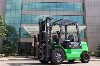
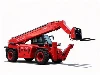
In various construction sites, loaders have always been a common sight. From earthwork transportation at construction sites, material stacking at aggregate yards, to loading and unloading operations in industrial areas, loaders can be seen working everywhere.
Many people think loaders are widely used because they can "do a little bit of everything." This is true, but it only describes the surface. The real uniqueness of a loader lies in its articulated frame structure - this is the fundamental reason why it stands apart from other equipment.

Where are loaders commonly used?
Let's take a look at some typical application scenarios:
· Sand and gravel plants, concrete mixing stations: Frequent loading and unloading of sand, gravel, crushed stone, soil, and other bulk materials requires equipment that can quickly perform loading and short-distance transportation.
· Construction sites: Earthwork cleaning, material transfer, and site leveling involve various tasks and constantly changing working environments.
· Industrial plants and storage yards: Material loading and unloading, stacking, and organization require equipment that is flexible and does not occupy too much working space.
These applications share one common feature: limited space but frequent turning and movement. This is exactly where the articulated structure shows its advantages.
Why is the articulated structure the core advantage of a loader?
For equipment with a conventional rigid frame, steering is achieved through the movement of the front wheels, resulting in a relatively larger turning radius. A loader, however, adopts an articulated frame structure - the machine body is divided into front and rear sections connected by an articulation pin. Hydraulic cylinders push the front and rear frames to form an angle, allowing the machine to steer.
This design brings several practical advantages:
· Smaller turning radius: In narrow construction passages, aggregate yards, or material storage areas, loaders can complete turning operations within a smaller space, making back-and-forth movement more flexible.
· More precise operation: The articulated structure allows more direct control of the machine's posture. When approaching material piles, trucks, or hoppers, operators can align the equipment more accurately, reducing repeated adjustments.
· Better adaptability to uneven ground: The front and rear frames have a certain degree of movement flexibility. When operating on unpaved roads or uneven surfaces, the wheels can better follow the terrain, maintaining traction and stability.
· Protection of the frame and ground: The articulated structure itself absorbs part of the impact from the ground, reducing stress on the frame and tires when working in complex conditions.
Therefore, the advantage of a loader is not simply that it can "do everything," but that it performs more efficiently in working conditions that require frequent turning and limited operating space. Loading is its basic function, while flexibility is the key reason why it is widely selected.
A loader is more than just equipment for "moving materials"
Many people still associate loaders with "shoveling soil and loading materials." However, with the development of attachments, the capabilities of loaders have expanded far beyond that.
In addition to standard buckets, loaders can be equipped with different attachments according to specific working conditions, such as fork attachments, snow blades, and sweepers, for material handling, cleaning, and transportation tasks. This allows loaders to play an important role in construction, mining, industrial manufacturing, agriculture, municipal sanitation, and other fields.
What factors should be considered when choosing a loader?
Different projects have different requirements for loaders. When selecting equipment, users should consider more than just tonnage and power. Key factors include:
· Working environment: Indoor or outdoor operation? Hard surface roads or unpaved terrain?
· Material type: Bulk materials, large blocks, or other special materials? What requirements are there for buckets and attachments?
· Working intensity: How many hours does the machine operate each day? Is it used intermittently or for continuous heavy-duty operations?
· Site conditions: How wide are the working passages? Is the turning space sufficient? What are the requirements for maneuverability?
For example, long-term operations in mines or aggregate yards require greater attention to equipment load capacity and durability; while in factories, warehouses, and similar environments, operational flexibility and working efficiency may be more important.
Choosing equipment means finding what it does best
The reason loaders are commonly used in engineering projects is not because they are "all-round machines," but because their articulated structure perfectly matches many working conditions that require frequent turning and high maneuverability.
Every type of construction equipment has its own unique design and ideal applications. For users, the key to equipment selection is not finding a machine that can "do everything," but finding the one that best matches their specific working conditions.