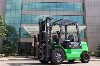
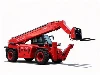
During the production of construction machinery-such as wheel loaders and fork-loaders-the frame is typically fabricated by welding together multiple steel plates. Components such as the engine, axles, operator cab, and working attachments must all be mounted onto specific locations on the frame.
While welding a frame may simply appear to be the process of joining steel plates together, a critical issue must be addressed during production: welding deformation.
I. Why Does Welding Cause Frame Deformation?
During welding, the affected areas are subjected to high temperatures, causing the metal to expand; as it cools, the metal then contracts. Since a frame contains numerous welds in various locations, each area experiences different heating and cooling cycles. If certain sections contract more than others, it can cause parts of the frame to bend, shift, or twist.
This is why deformation frequently occurs during the welding process.
II. What Are the Consequences of Frame Deformation?
Frames feature many areas that require precise installation-such as engine mounts, axle connection points, and attachment mounting interfaces. If the frame's dimensions deviate after welding, subsequent component installation may become difficult; for instance, mounting holes might not align, or components may end up positioned incorrectly.
Furthermore, the frame must withstand the loads generated during equipment operation and material handling. If the frame's structural dimensions fail to meet design specifications, it can compromise the assembly and overall functionality of the entire machine.
III. How Can Welding Deformation Be Minimized During Production?
When fabricating a frame, welding deformation is typically controlled through the following methods:
1. Optimizing the Welding Sequence
The welding sequence is generally planned to follow the structure of the frame, ensuring that heat does not concentrate in a single area. Where feasible, techniques such as sectional welding or symmetrical welding (welding both sides simultaneously) are used to reduce deformation caused by uneven contraction.
2. Utilizing Positioning Fixtures
Specialized fixtures (jigs) can be used to clamp and secure steel plates and components in place. This ensures that the parts remain in their intended positions, preventing them from shifting during the welding process.
3. Adjusting Welding Parameters
Welding parameters-such as current and travel speed-are carefully set based on the thickness of the steel plates and the specific location of the weld, ensuring that excessive heat is not introduced into the material. 4. Dimensional verification after welding
Once welding is complete, the overall dimensions of the frame and the positions of critical mounting points must be inspected. This ensures they conform to the specifications in the technical drawings, preventing dimensional errors that could hinder subsequent assembly.
IV. Why is the welding quality of the frame important?
The frame serves as a primary load-bearing structure for construction machinery, providing the foundation for the installation and connection of many critical components.
In equipment manufacturing, both the quality of welded joints and the dimensional accuracy of the frame are vital. Following the welding process, the frame must undergo rigorous inspection to verify that key locations meet design requirements, thereby laying a solid foundation for the final assembly of the complete machine.
From individual steel plates to a finished frame, welding is not merely about structural joining-it is a decisive factor in the overall manufacturing quality of the equipment.