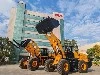
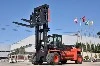
Stone block handlers are often used to move large stone blocks in quarries and stone yards. During operation, their tires must support the weight of the machine and the load. They are also affected by ground conditions, turning, and long hours of operation. Therefore, tire performance depends on more than load capacity alone.

Different Ground Conditions Place Different Demands on Tires
Quarry surfaces may contain loose stones, muddy areas, and uneven ground. The contact between the tires and the ground changes with the surface conditions. On loose ground, the tires need sufficient grip. In areas with many stones, sharp rocks may also press against or scrape the tread. Therefore, even when the load capacity is sufficient, tires may perform differently in terms of traction and resistance to damage on different surfaces.
Tires Also Experience Side Forces When Turning
When moving large stone blocks, a stone block handler needs to change direction as well as travel in a straight line. During a turn, the tires are not only subjected to vertical loads but also experience side forces between the tires and the ground. As the steering direction changes, the forces acting on different parts of the tires may also change. This means the forces on the tires are not limited to vertical loads; they also include the side forces generated during turning.
Continuous Operation Generates Heat
Tires repeatedly deform as they roll, generating heat inside the tire materials. For stone block handlers operating for long periods, tire temperature is affected not only by the load but also by travel speed, operating time, tire construction, and inflation pressure. Continued heat buildup can affect the condition of the tire materials and increase the risk of rubber aging or internal damage. Therefore, a tire's ability to support a certain load does not mean it will perform the same under all operating conditions.
Tire Deformation Also Affects Ground Contact
Tires deform under load, and the degree of deformation depends on tire construction, inflation pressure, and the actual load. This deformation affects the contact area and pressure distribution, which in turn influence how the tires interact with the ground. On stone block handlers, changes in load and uneven ground can also affect how the tires are loaded, making actual operating conditions more complex than static load conditions.