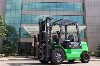
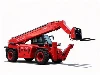
In heavy industrial material handling, diesel forklifts are renowned for their powerful performance and durability. However, when it comes to core performance metrics for forklifts, besides the well-known "lifting capacity," another crucial parameter is operating weight. Understanding the dynamic balance between operating weight and load not only ensures operational safety but also improves logistics efficiency.

1. What is Operating Weight?
Operating weight, also known as service weight, is simply the total weight of a forklift in its fully loaded operating state, including fuel, counterweights, and even the operator.
A diesel forklift is essentially a mobile lever. With the front wheels as the fulcrum, the operating weight behind must be large enough to counteract the tipping moment of the load in front. Therefore, to ensure safety, the tare weight of a diesel forklift is typically 1.5 to 2 times its rated lifting capacity. For example, a 3-ton diesel forklift often has an operating weight of around 4.5 tons. This weight is not arbitrary but fundamental to safe operation.
2. Composition of Operating Weight
Operating weight isn't arbitrary; its core components include:
- Cast Iron Counterweight: This is the most prominent part of the operating weight, mounted at the rear of the vehicle, directly determining the forklift's forward and backward stability.
- Reinforced Steel Chassis: Diesel forklifts are often used in rugged outdoor terrain. The high-strength integral chassis not only provides structural rigidity, preventing damage and deformation, but also ensures stability during operating weight.
- Powertrain Weight: Compared to an electric motor, a diesel engine plus its transmission system is heavier. While increasing the vehicle's weight, it also provides better traction when climbing hills under heavy loads.
3. Why is Operating Weight Crucial in Actual Operations?
Many people may only focus on how much cargo a forklift can lift, neglecting the operating weight, which directly affects operational safety and efficiency.
If a forklift needs to enter freight elevators, decks, etc., the sum of "operating weight + load" must be calculated. Ignoring the operating weight and resulting in overloading can lead to a series of safety accidents.
The greater the operating weight, the greater the pressure the tires exert on the ground, resulting in better traction and preventing slippage when operating on wet or muddy surfaces.
For both equipment managers and forklift operators, understanding operating weight is the first step in ensuring operational safety. Choosing the right diesel forklift involves not only considering its lifting capacity but also whether its own weight is sufficient to support efficient material handling every time.