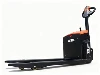
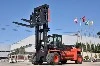
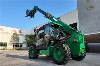
Electric forklifts are commonly used in warehouses, production workshops, and various material handling areas. Compared with diesel forklifts, they produce no exhaust emissions from an internal combustion engine during operation and generally operate with lower noise levels. However, electric forklifts are not limited to indoor use. Their suitability also depends on ground conditions, work schedules, and charging facilities.
Enclosed Indoor Spaces
Warehouses, factories, and indoor logistics centers are typical working environments for electric forklifts. In enclosed spaces where ventilation may be limited, electric forklifts help avoid the exhaust emissions associated with internal combustion engines.
In storage aisles, sorting areas, and indoor loading zones, forklifts are often used for short-distance transportation and moving goods in and out of storage. Electric forklifts can handle many of these everyday material handling tasks.


Areas with Strict Emission and Noise Requirements
Food processing facilities, pharmaceutical warehouses, and certain production areas with specific indoor air quality requirements pay close attention to equipment emissions. Since electric forklifts do not produce exhaust emissions from an internal combustion engine, they offer an advantage in these environments.
Some factories also require material handling equipment to operate in areas where employees are working throughout the day. Electric forklifts generally produce less operating noise, helping reduce disturbance to nearby workers. However, sounds from tire movement and hydraulic system operation are still present. In areas with specific hygiene or safety standards, the forklift configuration must also meet the relevant requirements.
Workplaces with Frequent Material Handling and Repeated Stops
In production line feeding, warehouse picking, and internal factory transportation, forklifts may need to repeatedly pick up goods, unload materials, turn, and reposition. Electric forklifts are well suited to many of these repetitive handling tasks.
Operating time is an important consideration under these working conditions. Frequent driving, lifting, and lowering all consume battery power. If daily workloads are concentrated and there are only short breaks between tasks, suitable charging arrangements or a higher-capacity battery may be needed to support longer operating hours.
Outdoor Areas with Even Ground Surfaces
Electric forklifts can also be used in certain outdoor environments, such as paved factory roads, loading platforms outside warehouses, and short-distance transport routes between workshops and storage areas.
These locations generally have relatively even ground surfaces and clearly defined travel routes. Electric forklifts designed for the relevant working conditions can handle routine material transportation in these areas.
However, if the site has loose gravel, potholes, steep slopes, or standing water, factors such as tire type, ground clearance, driving capability, and protective features need further consideration. Not every electric forklift is designed for rough terrain, and suitability depends on the specific model.
Workplaces with Access to Charging Facilities
Electric forklifts require regular charging, so the availability of suitable charging facilities is another important factor when determining whether they are right for a particular workplace.
In warehouses and production workshops with fixed working hours, charging can usually be arranged during breaks or outside operating hours. For equipment that needs to run for extended periods or across multiple shifts, battery capacity, charging time, and the availability of charging facilities all need to match the work schedule. Different battery types also have different charging requirements, which should be followed according to the equipment manufacturer's instructions.
The suitability of an electric forklift ultimately depends on whether the working environment meets its operating requirements. Understanding the actual site conditions helps make better use of the equipment's capabilities.
Coming Up | Forklift Series ⑤
Electric forklifts are closely associated with their working environments. However, on challenging surfaces such as muddy ground, gravel, and slopes, conventional forklifts may struggle to meet the demands of the job.
Rough terrain forklifts are designed for outdoor working conditions and are commonly used in construction, engineering projects, and other material handling operations on uneven ground.
In the next article, we will take a closer look at rough terrain forklifts and explore the types of construction sites where they are most suitable.