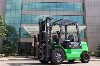
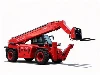
In the material handling equipment system, although everyone generally refers to them as forklifts, "forklift" is not actually the name of a single piece of equipment, but a large family encompassing different structures and functional models. Counterbalance forklifts are a relatively common type, and can be considered the basic model. However, in actual use, there are still significant differences between them and reach trucks, narrow aisle forklifts, and telescopic boom lifts.

I. Core Differences in Structural Design
The most distinctive feature of counterbalance forklifts is their self-balancing design. By using a counterweight at the rear to offset the weight of the goods in front and maintain stability, they can independently complete loading and unloading tasks without relying on outriggers or rails during operation.
Reach trucks, as the name suggests, achieve high-level stacking by moving the mast forward; narrow aisle forklifts rely on special guiding or rail systems to adapt to extremely narrow aisle environments. These designs are all to address the material handling needs of different spaces.
II. Different Requirements for Operating Space and Flexibility
Counterbalance forklifts use rear-wheel steering, and although the radius is relatively small, a certain aisle width is still required. It can be used in general warehouses, workshops, and outdoors, demonstrating strong adaptability. However, forklifts, narrow aisle forklifts, and side-mounted forklifts are more suited to specific warehouse layouts, requiring less space during site planning and improving space utilization.
III. Application Scenarios
In the manufacturing and logistics industries, counterbalance forklifts play a fundamental role, an indispensable part of daily material handling. Other types of forklifts are often used as supplementary equipment, specifically designed for special operating conditions.
In mature material handling systems, they are not mutually exclusive but rather work together according to operational needs. This improves overall work efficiency.
The design differences between forklifts are primarily due to their different applicable scenarios, not simply a matter of "which is better." Understanding these differences allows for a clearer understanding of the intricacies of modern material handling equipment.