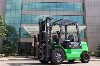
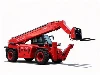
In material handling scenarios in industries such as pipes, timber, and wind power equipment, steel, pipes, and wind turbine blades are long and bulky. Traditional equipment occupies a significant amount of space and is inefficient during handling. However, side-mounted forklifts, with their unique structural design and functional advantages, break through these limitations. With increasing warehouse density, rising labor costs, and stricter logistics safety requirements, side-mounted forklifts are being added to the procurement lists of more and more companies.
Safety Performance
During the handling of long materials, shifting center of gravity, obstructed visibility, or material swaying can easily lead to safety accidents. The loading platform and structure of side-mounted forklifts keep materials close to the vehicle body, resulting in more even force distribution. Protective bars reduce or prevent material falls. The cab provides a clear view of the goods on the side, and most forklifts are now equipped with outriggers to maintain vehicle stability and prevent tipping due to heavy loads.
Space Saving
With the continuous rise in land, factory rent, and labor costs, warehouse space is becoming a valuable resource for many companies. Traditional forklifts face a space bottleneck when handling long materials: wide aisles are required for picking up, turning, and maneuvering, leaving limited usable stacking space and significant waste. In contrast, side-mounted forklifts offer businesses new space design solutions. With their forks positioned to the side of the vehicle, they eliminate the need for sharp turns or multiple reversing maneuvers for corrections; they can simply move in a straight line along the direction of the goods. This allows them to navigate aisles of approximately two meters, saving businesses considerable space.
Operating Efficiency and Economy
In large-scale production, handling efficiency directly impacts overall capacity. Side-mounted forklifts offer significant advantages in efficiency and cost control. Firstly, they enable one-stop handling without frequent equipment changes. Secondly, their relatively simple structure and fewer vulnerable parts result in lower long-term maintenance costs compared to dedicated material handling equipment. Furthermore, they can be equipped with various attachments, allowing for the handling of both long and ordinary materials, making them multi-functional.
In summary, side-mounted forklifts, with their high safety, space-saving, high efficiency, and economy, meet the needs of enterprises and are becoming essential equipment in this field, addressing the pain points of handling long materials.