After a loader completes the loading process, it must lift and tilt the bucket to discharge the material into a dump truck, hopper, or designated stockpile area. Materials with good flowability-such as sand, gravel, and crushed aggregate-usually discharge smoothly. However, when handling wet soil, clay, or moist sandy soil, some material may remain on the bucket floor and walls even after the bucket has been tilted to the unloading position.
This situation is not uncommon. Factors such as the material's inherent adhesiveness and moisture content, as well as the bucket's structural design and operating conditions, all influence the final unloading outcome.
Material moisture content is a key factor affecting adhesion.
Dry sand and crushed stone particles have weak inter-particle bonding; once the bucket tilts, gravity allows them to slide out quickly. In contrast, as the moisture content of wet soil or clay increases, the bonding between particles strengthens, making the material more likely to adhere to metal surfaces.
This is particularly common during earthworks following rain, where material inside the bucket may have been compressed into dense, solid clumps. Even after the bucket has fully tilted, some material may remain stuck to the floor or rear wall.
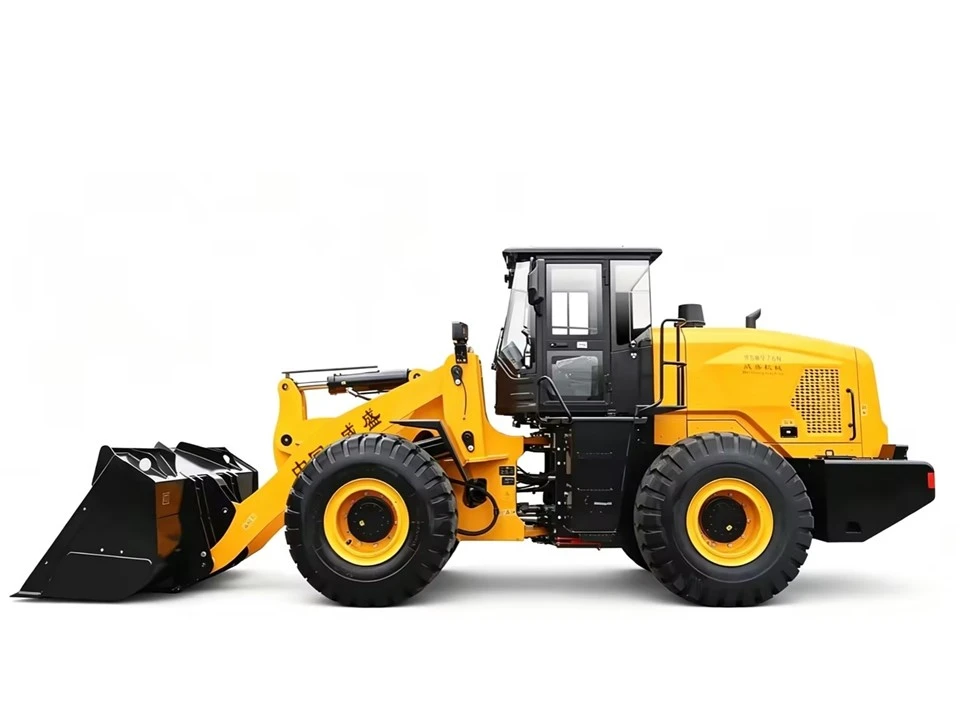
A bucket does more than just carry material; structural features-such as the curvature of the floor, the angle of the rear wall, and the size of the bucket opening-influence how material enters and exits.
Materials with good flowability slide out rapidly as the bucket tilts. However, with highly adhesive materials, if the load was compacted during the scooping process, partial residue may remain after tilting.
Unloading procedures vary depending on the operating conditions.
Unloading requires the loader's work equipment to perform both lifting and bucket-tilting actions. Different material flow characteristics require different tilting angles and operational sequences.
With loose materials, the load usually separates quickly from the bucket once it reaches the unloading position. With materials that have high moisture content or strong adhesion, however, a single tilting action may still leave some residue behind.
This does not necessarily mean that simply repeating the tilting action is the solution. In actual operation, it is crucial to control the movements of the working equipment based on the condition of the material. The goal is to ensure the material discharges smoothly from the bucket while minimizing unnecessary repetitive maneuvers.
Material residue in the bucket can also affect subsequent loading operations.
If significant amounts of material remain in the bucket after each discharge, the residue may gradually accumulate and compact over repeated cycles, forming an adhered layer at the bottom of the bucket.
Over time, this buildup not only reduces the bucket's effective capacity but can also alter the flow dynamics of material entering the bucket. Furthermore, prolonged adhesion may lead to corrosion of the bucket itself. For equipment engaged in continuous loading operations, such persistent residue can hinder normal performance.
Therefore, when handling cohesive materials, operators should not only monitor the loader's operating status but also regularly clean the bucket interior and inspect components-such as the bucket bottom, walls, and cutting edge-for wear.
Poor discharge performance does not necessarily indicate a mechanical fault. Identifying the root cause based on specific operating conditions and adjusting bucket usage and maintenance practices is far more effective than simply repeating the discharge action.