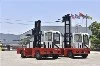
When purchasing a forklift, many users focus on load capacity, power system, and mast configuration, forgetting about the "crucial shoes" on its feet. In fact, as the only part of the forklift in contact with the ground, tires not only affect the equipment's stability but also operational efficiency, maintenance costs, and lifespan. Choosing the right tires ensures stable driving, high efficiency, and lower maintenance costs. Today, we'll discuss how to choose between solid and pneumatic tires.
If you work year-round in flat warehouses, logistics centers, or factory workshops, solid tires are a worry-free choice. They are made from a single piece of high-strength rubber, without any air, like a solid block of rubber. You don't have to worry about them being punctured by sharp objects or suddenly bursting.
During peak seasons, forklifts typically run for more than 8 hours a day, moving at full capacity between racks. Solid tires can withstand high-frequency friction and may not need replacing for several years. No more regular tire pressure checks or patching; maintenance-free operation makes it a cost-effective and convenient necessity.
Pneumatic tires, filled with compressed air, offer superior cushioning and shock absorption. If you frequently work on construction sites, in mines, or on gravel roads, pneumatic tires are the perfect choice. They effectively absorb impacts from potholes, bumps, or gravel, ensuring a smooth ride and protecting cargo from damage. This also reduces wear and tear on the mast and hydraulic system. However, remember to check tire pressure regularly and inspect for sharp objects like steel bars or nails to prevent punctures and leaks.


Choose from three options to suit your specific needs:
1. Site: Flat ground with small, sharp objects – solid tires; complex ground – pneumatic tires
2. Working conditions: Long-term heavy loads, multiple shifts daily – solid tires; complex terrain, goods susceptible to vibration – pneumatic tires
3. Cost: Solid tires are initially more expensive, but have a longer lifespan and require no maintenance, making them more cost-effective in the long run; pneumatic tires have lower initial costs, but require time for inspection and regular tire repair and replacement.
Don't blindly follow trends when choosing tires; the key is "suitability"-where your forklift will operate daily, the weight of goods it will handle, and the duration of its use are the deciding factors. If you're still unsure, consult with a professional equipment service provider: for example, solid tires ensure efficiency when maneuvering between warehouse shelves; pneumatic tires provide stable passage for outdoor construction work.
After all, forklifts are your "partners" who help you make money. Choosing the right "shoes" for them will ensure they run more stably and last longer, making every move worry-free and efficient. If you are struggling to choose the right model, feel free to contact us anytime. We will customize the most suitable solution for you based on your specific working conditions.