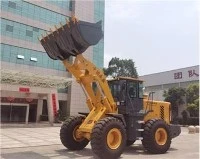
The ground clearance of a quarry wheel loader is a critical specification that can significantly impact its performance and suitability for various applications. As a seasoned supplier of quarry wheel loaders, I'm well - versed in discussing the nuances of this important feature.
Understanding Ground Clearance
Ground clearance refers to the distance between the lowest point of a vehicle (usually the bottom of the chassis or the differential) and the ground when the vehicle is at rest. In the context of a quarry wheel loader, it is a key factor influencing the machine's ability to navigate rough and uneven terrains commonly found in quarry environments.
In a quarry, the loader may have to traverse over rocks, mounds of debris, and uneven ground surfaces. A higher ground clearance allows the loader to move over these obstacles without the risk of getting stuck or causing damage to the undercarriage. For example, if a loader has a relatively low ground clearance, large rocks or debris can scrape against the chassis, leading to potential damage to vital components such as the fuel tank, hydraulic lines, or the transmission system.
Factors Affecting Ground Clearance in Quarry Wheel Loaders
- Tire Size: Larger tires naturally increase the ground clearance of a quarry wheel loader. When a loader is equipped with bigger tires, the overall height of the machine from the ground to the chassis is raised. Tires are the first line of interaction with the ground, and choosing the right tire size can be a strategic decision based on the specific requirements of the quarry. For instance, in a quarry with a lot of large - sized rocks, larger tires can provide the necessary clearance to avoid underside damage.
- Chassis Design: The design of the chassis plays a crucial role in determining ground clearance. Some quarry wheel loaders are engineered with a raised or arched chassis design. This design allows for a greater distance between the ground and the bottom of the chassis, optimizing the machine's ability to handle rough terrains. Manufacturers can adjust the chassis shape to balance the need for ground clearance with other factors such as stability and maneuverability.
- Load Capacity and Vehicle Suspension: As a quarry wheel loader takes on a heavy load, the suspension system compresses, which can reduce the ground clearance. This is an important consideration when operating in a quarry where the loader is frequently filled to its maximum capacity. A well - designed suspension system can help maintain a reasonable ground clearance even under heavy loads. For example, load - sensing suspension systems can adjust the suspension height based on the load weight, ensuring that the ground clearance remains within an acceptable range.
Ideal Ground Clearance for Quarry Applications
The ideal ground clearance for a quarry wheel loader depends on the specific conditions of the quarry. In general, a ground clearance of around 30 - 50 centimeters (12 - 20 inches) is considered suitable for most quarry operations. However, this can vary based on several factors.
In a quarry with large, scattered rocks and significant debris, a higher ground clearance of up to 60 centimeters (24 inches) or more may be necessary. This extra clearance allows the loader to move freely without the constant fear of getting hung up on obstacles. On the other hand, in a quarry with relatively smooth terrains and smaller debris, a slightly lower ground clearance can still be effective.
Another aspect to consider is the type of work the loader will be performing. If the loader is primarily used for loading and transporting materials on flat areas within the quarry, a lower ground clearance may be acceptable. But if it needs to access remote areas with rough ground, a higher ground clearance becomes essential.
Advantages of Optimal Ground Clearance in Quarry Wheel Loaders
- Enhanced Maneuverability: A quarry wheel loader with the right ground clearance can easily navigate through the quarry site. It can turn around, reverse, and move in tight spaces without being hindered by the ground surface. This enhanced maneuverability leads to increased productivity as the loader can quickly position itself to load and unload materials.
- Reduced Maintenance Costs: By avoiding damage to the undercarriage, a loader with proper ground clearance can significantly reduce maintenance costs. Fewer repairs to the chassis, fuel tank, and hydraulic lines mean less downtime and lower overall operating expenses. This is especially important in a quarry environment where continuous operation is crucial for meeting production targets.
- Improved Safety: Adequate ground clearance also contributes to the safety of the operator. When the loader can smoothly move over obstacles, there is a lower risk of sudden jolts or impacts that could potentially harm the operator. Additionally, a well - designed loader with proper ground clearance is less likely to tip over on uneven terrain, further enhancing the safety of the operation.
Other Features to Complement Ground Clearance
In addition to ground clearance, other features of a quarry wheel loader are equally important for optimal performance in a quarry environment.
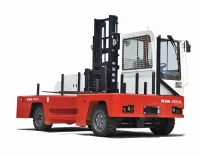
For handling large stone blocks, a Stone Block Handler can be a valuable addition to the loader. It is specifically designed to grip and move heavy stone blocks with precision, making the loading and unloading process more efficient.
The Stone Handler offers similar functionality but may be more suitable for different types of stone materials. It can be customized to fit the specific needs of the quarry, ensuring that the loader can handle a wide variety of stone products.


If you are dealing with marble and granite, the Forklift Wheel Loader Marble Granite is a specialized option. It combines the features of a wheel loader with the ability to handle delicate and high - value materials like marble and granite without causing damage.
Contact for Quarry Wheel Loader Procurement
If you are in the market for a quarry wheel loader and want to discuss the ideal ground clearance and other features for your specific quarry requirements, we are here to help. Our team of experts can provide you with in - depth information, product demonstrations, and competitive pricing. Whether you are starting a new quarry operation or looking to upgrade your existing fleet, we have the right solutions for you. Reach out to us to start a productive conversation about your quarry wheel loader needs.
References
- Construction Equipment Handbook, various editions
- Quarrying Industry Research Reports on Equipment Performance