

When it comes to port operations, wheel loaders play a crucial role in handling various materials efficiently. As a leading supplier of Port Wheel Loaders, we often receive inquiries about the maximum hydraulic pressure of our loader systems. This blog post aims to provide a comprehensive understanding of this important aspect, exploring the factors that influence it and its significance in the performance of our machines.

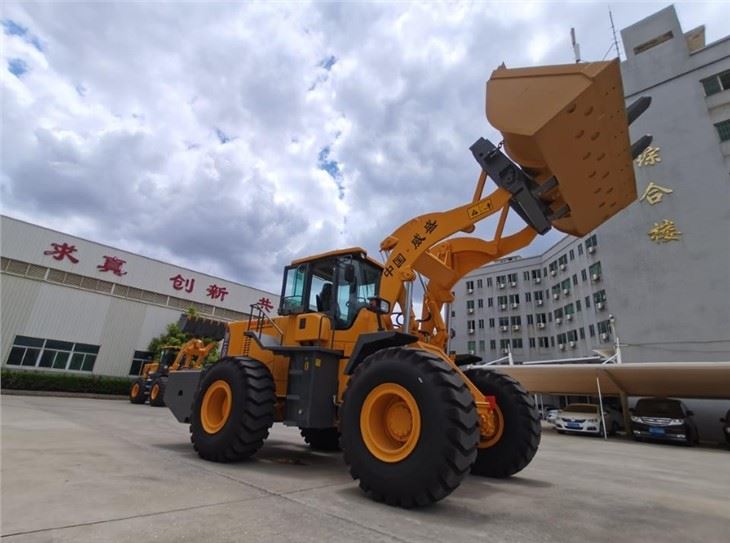
Understanding Hydraulic Pressure in Port Wheel Loaders
Hydraulic systems are the heart of modern port wheel loaders. They are responsible for powering the lifting, tilting, and steering functions of the loader, enabling it to handle heavy loads with precision and ease. The hydraulic pressure in these systems is the force exerted by the hydraulic fluid per unit area, measured in pounds per square inch (psi) or megapascals (MPa).
The maximum hydraulic pressure of a port wheel loader's system is a critical parameter that determines the loader's lifting capacity, speed, and overall efficiency. A higher maximum hydraulic pressure allows the loader to generate more force, enabling it to lift heavier loads and perform tasks more quickly. However, it also requires a more robust hydraulic system, including pumps, valves, and cylinders, to handle the increased pressure.
Factors Affecting the Maximum Hydraulic Pressure
Several factors influence the maximum hydraulic pressure of a port wheel loader's system. These include:
- Hydraulic Pump Capacity: The hydraulic pump is responsible for generating the pressure in the system. Its capacity, measured in gallons per minute (GPM) or liters per minute (LPM), determines the amount of fluid it can deliver at a given pressure. A higher-capacity pump can generate more pressure, allowing the loader to handle heavier loads.
- Hydraulic Valve Design: The hydraulic valves control the flow and pressure of the hydraulic fluid in the system. Their design affects the efficiency and responsiveness of the loader's hydraulic functions. Well-designed valves can maintain a consistent pressure and flow, ensuring smooth operation and precise control.
- Hydraulic Cylinder Size and Strength: The hydraulic cylinders are the actuators that convert the hydraulic pressure into mechanical force. Their size and strength determine the maximum lifting capacity and force that the loader can generate. Larger cylinders with thicker walls can withstand higher pressures and handle heavier loads.
- Hydraulic Fluid Properties: The properties of the hydraulic fluid, such as viscosity, density, and temperature resistance, can also affect the maximum hydraulic pressure. A high-quality hydraulic fluid with the appropriate viscosity and temperature range ensures smooth operation and prevents damage to the hydraulic components.
Typical Maximum Hydraulic Pressures in Port Wheel Loaders
The maximum hydraulic pressure of a port wheel loader's system can vary depending on the model and application. Generally, port wheel loaders have maximum hydraulic pressures ranging from 20 MPa (2,900 psi) to 35 MPa (5,076 psi). However, some high-performance models may have even higher maximum pressures.
For example, our Bucklet Loader series is designed for heavy-duty port operations and features a maximum hydraulic pressure of up to 32 MPa (4,641 psi). This allows it to handle large volumes of bulk materials, such as coal, ore, and grain, with ease.
Our Sand Loader series, on the other hand, is optimized for handling sand and other fine materials. It has a maximum hydraulic pressure of 25 MPa (3,626 psi), which provides sufficient power for efficient loading and unloading operations.
For smaller-scale port operations, our China Mini Loader offers a compact and versatile solution. It has a maximum hydraulic pressure of 20 MPa (2,900 psi), making it suitable for light to medium-duty tasks.
Significance of Maximum Hydraulic Pressure in Port Operations
The maximum hydraulic pressure of a port wheel loader's system has a significant impact on its performance and productivity in port operations. Here are some key benefits of a high maximum hydraulic pressure:
- Increased Lifting Capacity: A higher maximum hydraulic pressure allows the loader to generate more force, enabling it to lift heavier loads. This is particularly important in port operations, where large volumes of bulk materials need to be handled quickly and efficiently.
- Faster Cycle Times: With a higher maximum hydraulic pressure, the loader can operate at a faster speed, reducing the time required to complete each loading and unloading cycle. This improves productivity and allows for more efficient use of resources.
- Improved Precision and Control: A well-designed hydraulic system with a high maximum hydraulic pressure provides precise control over the loader's functions. This allows operators to handle materials with greater accuracy, reducing the risk of spills and damage.
- Enhanced Durability and Reliability: A high-quality hydraulic system that can withstand high pressures is more durable and reliable. It is less likely to experience breakdowns and requires less maintenance, ensuring continuous operation and minimizing downtime.
Conclusion
The maximum hydraulic pressure of a port wheel loader's system is a critical parameter that determines its performance, productivity, and reliability. As a leading supplier of Port Wheel Loaders, we understand the importance of providing our customers with machines that offer the right balance of power, efficiency, and durability.
Our range of port wheel loaders is designed to meet the diverse needs of port operations, with maximum hydraulic pressures tailored to different applications. Whether you need to handle heavy bulk materials or fine sand, we have the right loader for the job.
If you are interested in learning more about our Port Wheel Loaders or would like to discuss your specific requirements, please feel free to contact us. Our team of experts is ready to assist you in finding the perfect solution for your port operations.
References
- "Hydraulic Systems in Construction Equipment" - Construction Equipment Magazine
- "Principles of Hydraulic Engineering" - John F. Douglas, et al.
- "Port Machinery and Equipment Handbook" - International Association of Ports and Harbors


