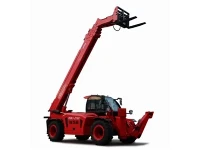
As a seasoned forklift truck supplier, I've witnessed firsthand the diverse needs of industries when it comes to material handling equipment. Two of the most commonly used types of forklifts are stand-up forklift trucks and sit-down forklift trucks. While they share the same fundamental purpose of lifting and moving heavy loads, there are significant differences between them that can impact their suitability for various applications. In this blog post, I'll delve into the distinctions between these two types of forklifts, exploring their features, advantages, and ideal use cases.
Design and Ergonomics
One of the most obvious differences between stand-up and sit-down forklift trucks lies in their design and ergonomics. As the names suggest, a stand-up forklift requires the operator to stand during operation, while a sit-down forklift provides a seat for the operator.
Stand-up forklifts are typically more compact and maneuverable than sit-down forklifts. They have a smaller turning radius, which makes them ideal for use in tight spaces such as narrow aisles and congested warehouses. The standing position allows operators to have better visibility of their surroundings, as they can easily look over the forks and around the load. Additionally, stand-up forklifts are often equipped with a side-shift feature, which allows the operator to move the forks horizontally without having to reposition the entire truck. This can save time and increase efficiency when handling multiple loads.
On the other hand, sit-down forklifts offer a more comfortable and ergonomic operating position for longer shifts. The seat provides support and reduces fatigue, which is especially important for operators who spend extended periods of time on the forklift. Sit-down forklifts also tend to have a larger and more stable base, which can make them better suited for handling heavier loads. They are typically used in applications where the operator needs to travel longer distances or where the terrain is uneven or rough.
Maneuverability and Productivity
When it comes to maneuverability, stand-up forklifts have a clear advantage. Their compact design and smaller turning radius allow them to navigate through tight spaces with ease. This makes them ideal for use in high-density storage environments, where maximizing space utilization is crucial. Stand-up forklifts can also be quickly and easily turned around in narrow aisles, which can save time and increase productivity.
In contrast, sit-down forklifts are better suited for applications that require longer travel distances. Their larger size and more stable base make them more suitable for traveling at higher speeds and over uneven terrain. Sit-down forklifts are also typically equipped with a more powerful engine, which allows them to handle heavier loads and climb steeper inclines. However, their larger turning radius can make them more difficult to maneuver in tight spaces, which can reduce productivity in some applications.
Load Capacity and Reach
Another important factor to consider when choosing between a stand-up and sit-down forklift is the load capacity and reach. Stand-up forklifts are typically designed for lighter loads and shorter reach applications. They are commonly used for tasks such as order picking, stacking pallets, and transporting small to medium-sized loads. Stand-up forklifts can typically handle loads ranging from 2,000 to 6,000 pounds, depending on the model and configuration.
Sit-down forklifts, on the other hand, are designed for heavier loads and longer reach applications. They are commonly used for tasks such as loading and unloading trucks, stacking large pallets, and handling heavy machinery. Sit-down forklifts can typically handle loads ranging from 3,000 to 55,000 pounds, depending on the model and configuration. They are also available with a variety of mast heights and reach options, which allows them to handle loads at different heights and distances.
Safety Considerations
Safety is always a top priority when operating any type of forklift. Both stand-up and sit-down forklifts are equipped with a variety of safety features to protect the operator and the surrounding environment. However, there are some differences in the safety considerations for each type of forklift.
Stand-up forklifts are typically equipped with a safety cage or guardrail to protect the operator from falling. They also have a lower center of gravity, which makes them more stable and less likely to tip over. However, the standing position can increase the risk of fatigue and injury, especially if the operator is not properly trained or if the forklift is not used in accordance with the manufacturer's instructions.
Sit-down forklifts are typically equipped with a seatbelt to protect the operator in the event of an accident. They also have a larger and more stable base, which makes them less likely to tip over. However, the seated position can reduce the operator's visibility of their surroundings, which can increase the risk of collisions and other accidents. It is important for operators to be aware of their blind spots and to use caution when operating a sit-down forklift.
Ideal Use Cases
Based on the differences in design, maneuverability, load capacity, and safety considerations, stand-up and sit-down forklifts are best suited for different types of applications.


Stand-up forklifts are ideal for use in high-density storage environments, such as narrow aisle warehouses and distribution centers. They are also well-suited for order picking applications, where the operator needs to quickly and easily access products stored on shelves or racks. Stand-up forklifts are commonly used in industries such as retail, e-commerce, and food and beverage.
Sit-down forklifts are best suited for applications that require longer travel distances, heavier loads, and more stability. They are commonly used in industries such as manufacturing, construction, and logistics. Sit-down forklifts are also well-suited for outdoor applications, where the terrain is uneven or rough.
Conclusion
In conclusion, the choice between a stand-up and sit-down forklift depends on a variety of factors, including the type of application, the load capacity and reach requirements, the operating environment, and the operator's comfort and safety. As a forklift truck supplier, I can help you determine which type of forklift is best suited for your specific needs. Whether you need a stand-up forklift for a narrow aisle warehouse or a sit-down forklift for a heavy-duty construction site, I have a wide range of forklifts to choose from.
If you're interested in learning more about our forklift trucks or would like to discuss your specific requirements, please don't hesitate to contact us. We offer a comprehensive range of forklift trucks, including Forklift 10 Ton 15 Ton 25 Ton 36 Ton Rough Terrain Diesel Wheeled Lt Off-road Forklift, Wholesale Construction Forklift, and Buy Discount Design Construction Forklift. Our team of experts is dedicated to providing you with the best possible service and support, and we look forward to helping you find the perfect forklift for your business.
References
- Forklift Safety Guide, Occupational Safety and Health Administration (OSHA)
- Forklift Operator Training Manual, National Forklift Safety Foundation (NFSF)
- Material Handling Equipment Handbook, Industrial Truck Association (ITA)