When considering investing in a block wheel loader for your business, it's crucial to make an informed decision that aligns with your specific operational needs and long - term goals. As a well - established supplier of block wheel loaders, I understand the significance of this choice and am here to guide you through the process.
Understanding Your Business Requirements
The first step in choosing the right block wheel loader is to thoroughly understand your business requirements. Consider the type of materials you'll be handling. Are you dealing with large, heavy blocks of granite, or perhaps smaller, lighter construction materials? The weight and size of the materials directly impact the loader's capacity requirements. For instance, if you're in the granite quarry business, you'll likely need a loader with a higher lifting capacity to handle the heavy blocks.
The working environment is another vital factor. If your operations are in an underground tunnel, you'll want a loader that is specifically designed for such confined spaces. The Wheel Backhoe Loader Underground Tunnel Forklift Loader Hydraulic Loader is an excellent option in this case, as it offers enhanced maneuverability and safety features suitable for underground work.
Also, think about the frequency of use. If your loader will be operating continuously throughout the day, you'll require a machine with high durability and reliability. On the other hand, if it's for occasional use, you might be able to opt for a more budget - friendly model.
Evaluating Loader Capacity
Loader capacity is a key consideration. It's not just about the maximum weight the loader can lift but also about how it performs under different load conditions. A loader's capacity is typically measured in terms of its rated load capacity. This is the maximum weight that the loader can handle safely while maintaining stability.
For heavy - duty applications in mining, a Mining Wheel Loader is often the best choice. These loaders are engineered to handle large volumes of heavy materials, such as ores and rocks, in demanding mining environments. They usually have a high rated load capacity and are built to withstand the rigors of continuous operation.
However, don't overlook the fact that the shape and center of gravity of the loads can also affect the effective capacity. Irregularly shaped blocks may require a lower load capacity to ensure safe and stable lifting.
Maneuverability and Flexibility
In many work settings, maneuverability is as important as lifting capacity. A loader that can easily navigate tight spaces and perform quick turns can significantly improve productivity. Look for loaders with a small turning radius and responsive steering systems.
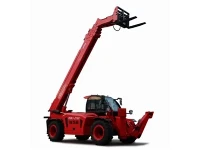
The Wheel Load Telehandler offers excellent maneuverability. It combines the features of a wheel loader and a telehandler, allowing for greater reach and flexibility. This type of loader is particularly useful in construction sites where it may need to access hard - to - reach areas.
Operator comfort and visibility also play a role in maneuverability. A well - designed cab with good visibility can help the operator move the loader more safely and efficiently, reducing the risk of accidents and improving overall productivity.
Power and Performance
The power source of the loader is an important aspect to consider. Most block wheel loaders are powered by diesel engines, which offer high torque and power for heavy - duty applications. However, you should also consider factors such as fuel efficiency and emissions.
Newer models often come with advanced engine technologies that improve fuel economy and reduce environmental impact. A more fuel - efficient loader can save you significant costs in the long run, especially if the loader is in continuous use.
In addition to the engine, the transmission system also affects performance. A smooth - shifting transmission ensures that the loader can operate efficiently at different speeds and handle varying loads with ease.


Maintenance and Support
Proper maintenance is essential to keep your block wheel loader in good working condition. When choosing a loader, consider the ease of maintenance. Look for models with easily accessible service points, and ask about the availability of spare parts.
As a supplier, we offer comprehensive maintenance support to our customers. We can provide regular maintenance schedules, on - site repairs, and a wide range of genuine spare parts. This ensures that your loader stays in top - notch condition and minimizes downtime.
It's also a good idea to check the manufacturer's warranty. A longer warranty period indicates the manufacturer's confidence in the quality of their product and provides you with peace of mind.
Cost - Benefit Analysis
Finally, a cost - benefit analysis is necessary. While it's tempting to choose the cheapest option available, it may not always be the best choice in the long run. Consider the initial purchase price, as well as the long - term operating costs, including fuel, maintenance, and repairs.
A more expensive loader with better features, higher durability, and lower operating costs may offer a better return on investment over time. Compare different models and suppliers to find the best balance between cost and performance.
Conclusion
Choosing the right block wheel loader for your business is a significant decision that requires careful consideration of multiple factors. By understanding your business requirements, evaluating loader capacity, maneuverability, power and performance, maintenance and support, and conducting a cost - benefit analysis, you can make an informed choice that will serve your business well for years to come.
As a trusted supplier of block wheel loaders, we are committed to helping you find the perfect loader for your specific needs. If you have any questions or would like to discuss your requirements further, please feel free to reach out to us. We look forward to the opportunity to work with you and support your business growth.
References
- Industry standards for wheel loaders
- Manufacturer's specifications and brochures
- Case studies from similar businesses in the industry