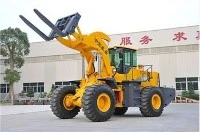
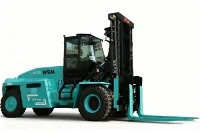
The transmission system of a Block Wheel Loader is a critical component that significantly influences the machine's performance, efficiency, and overall functionality. As a leading supplier of Block Wheel Loaders, we understand the importance of a well - functioning transmission system and are eager to share how it operates.
1. Basic Components of the Transmission System
The transmission system of a Block Wheel Loader consists of several key components, each playing a vital role in the power transfer process.
Torque Converter
The torque converter is the first major component in the power flow. It is located between the engine and the transmission. The main function of the torque converter is to transfer power from the engine to the transmission while also providing torque multiplication. When the engine rotates, it drives the impeller inside the torque converter. The impeller then transfers the fluid motion to the turbine, which is connected to the input shaft of the transmission. This fluid - coupling mechanism allows for smooth power transfer and provides a certain degree of torque amplification, especially at low speeds. For example, when the loader is starting from a standstill to move a heavy block, the torque converter can multiply the engine torque to provide the necessary force.
Transmission Gearbox
The transmission gearbox is responsible for changing the speed and torque of the loader. It contains multiple gears that can be engaged or disengaged to achieve different gear ratios. There are usually several forward gears and at least one reverse gear. The gearbox is controlled by a shift lever or an electronic control system. When the operator selects a different gear, the gearbox engages the appropriate set of gears to match the operating conditions. For instance, when the loader needs to move quickly on a flat surface, a higher gear can be selected to increase the speed. Conversely, when lifting a heavy block, a lower gear is chosen to provide more torque.
Drive Shafts
Drive shafts are used to transfer power from the transmission to the wheels. They are typically made of strong and durable materials to withstand the high - torque forces. The drive shafts connect the output of the transmission to the axles of the wheels. In a Block Wheel Loader, there are usually two drive shafts, one for the front wheels and one for the rear wheels. These drive shafts ensure that the power generated by the engine is effectively transmitted to the wheels, allowing the loader to move forward or backward.
Axles
The axles are an essential part of the transmission system as they support the weight of the loader and transfer the power from the drive shafts to the wheels. The axles are equipped with differential gears, which allow the wheels on the same axle to rotate at different speeds when turning. This is crucial for smooth and stable operation, especially when the loader is making sharp turns. For example, when the loader is turning a corner, the outer wheel needs to travel a longer distance than the inner wheel. The differential gear allows the outer wheel to rotate faster than the inner wheel, preventing tire skidding and ensuring proper traction.
2. Power Flow in the Transmission System
The power flow in the transmission system of a Block Wheel Loader starts from the engine. The engine generates mechanical power through the combustion of fuel. This power is then transferred to the torque converter.
As mentioned earlier, the torque converter multiplies the engine torque and transfers the power to the transmission gearbox. Inside the gearbox, the operator can select different gears according to the working requirements. Once the appropriate gear is engaged, the power is transmitted from the gearbox to the drive shafts.
The drive shafts then transfer the power to the axles. The axles, in turn, distribute the power to the wheels. The wheels convert the mechanical power into motion, allowing the loader to move forward or backward, and perform various tasks such as loading and unloading blocks.
3. Types of Transmission Systems in Block Wheel Loaders
There are mainly two types of transmission systems used in Block Wheel Loaders: mechanical transmissions and hydrostatic transmissions.
Mechanical Transmissions
Mechanical transmissions are the traditional type of transmissions used in many Block Wheel Loaders. They are known for their simplicity and reliability. In a mechanical transmission, the gears are engaged and disengaged through a clutch mechanism. The operator needs to manually shift the gears using a shift lever. This type of transmission is suitable for applications where the operating conditions are relatively stable and the operator has good control over the gear selection. However, it requires more skill from the operator to operate smoothly, especially when dealing with heavy loads or complex terrain.
Hydrostatic Transmissions
Hydrostatic transmissions are becoming increasingly popular in modern Block Wheel Loaders. In a hydrostatic transmission, the power is transmitted through hydraulic fluid. The system consists of a hydraulic pump and a hydraulic motor. The engine drives the hydraulic pump, which pressurizes the hydraulic fluid. The pressurized fluid then drives the hydraulic motor, which is connected to the wheels. Hydrostatic transmissions offer several advantages, such as smooth and stepless speed control, high efficiency at low speeds, and reduced wear and tear on the components. They are also easier to operate, as the operator only needs to control the speed and direction using a single pedal or joystick.


4. Importance of a Well - Functioning Transmission System
A well - functioning transmission system is crucial for the performance and productivity of a Block Wheel Loader.
Efficiency
A properly maintained transmission system can significantly improve the efficiency of the loader. By providing the right amount of torque and speed at the right time, the loader can perform tasks more quickly and with less fuel consumption. For example, a hydrostatic transmission can adjust the speed and torque continuously, allowing the loader to operate at its optimal efficiency in different working conditions.
Reliability
Reliability is another important aspect of the transmission system. A reliable transmission system reduces the risk of breakdowns and downtime. This is especially important in construction and mining applications, where any downtime can result in significant losses. Regular maintenance and inspection of the transmission system can help ensure its reliability and extend its service life.
Operator Comfort
A smooth - operating transmission system also enhances the operator's comfort. With a well - designed transmission, the operator can focus on the task at hand without having to worry about rough gear shifts or excessive vibrations. This not only improves the operator's working experience but also reduces the risk of fatigue and injuries.
5. Our Block Wheel Loaders and Their Transmission Systems
As a Block Wheel Loader supplier, we offer a range of loaders with different transmission systems to meet the diverse needs of our customers. Our loaders are equipped with high - quality components and advanced technologies to ensure optimal performance.
We have loaders with mechanical transmissions for customers who prefer the traditional and reliable operation. These loaders are suitable for applications where the operating conditions are relatively simple and the operator has experience in manual gear shifting.
For customers who require more advanced features and better performance, we offer loaders with hydrostatic transmissions. These loaders provide smooth and precise control, making them ideal for complex tasks and challenging terrains.
If you are interested in our Block Wheel Loaders, you can explore more about our products through the following links:
Wheel Backhoe Loader Underground Tunnel Forklift Loader Hydraulic Loader
Wheel Load Telehandler
Block Loading Machine
6. Contact Us for Purchase and Negotiation
We are committed to providing high - quality Block Wheel Loaders and excellent customer service. If you are considering purchasing a Block Wheel Loader, we invite you to contact us for further discussion. Our team of experts will be happy to assist you in choosing the right loader for your specific needs and provide you with detailed product information and pricing.
References
- Automotive Transmission Handbook, Edited by Friedrich Willumeit and Rainer Zellner
- Fundamentals of Vehicle Dynamics, by Thomas D. Gillespie