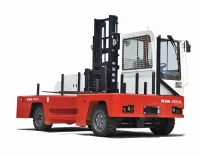
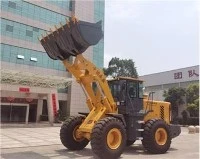
Hey there! As a supplier of Racing Telehandlers, I often get asked if the tires of these machines are suitable for different terrains. Well, let's dive right into it and find out.
First off, what exactly is a Racing Telehandler? It's a specialized piece of equipment that combines the features of a forklift and a crane. These bad boys are designed to handle heavy loads at high speeds, making them perfect for racing events and other high - energy operations. We offer a range of models like the Telescopic Boom Handler, Wharf Small Telehandler, and Telescopic Handler.
Now, let's talk about the tires. The tires on a Racing Telehandler are crucial for its performance. They're not just there to support the weight of the machine and the load; they also play a huge role in traction, stability, and overall handling.
Tires on Different Terrains
1. Paved Surfaces
On paved surfaces like race tracks or smooth industrial floors, the tires of a Racing Telehandler are generally well - suited. Most of these machines come with tires that have a smooth or slightly grooved tread pattern. This design is optimized for high - speed operation on hard, flat surfaces. The smoothness of the tread reduces rolling resistance, which means the telehandler can move more efficiently and use less fuel. It also provides good grip on dry pavement, allowing for quick acceleration and precise steering.
However, things can get a bit tricky when it rains. Wet pavement can reduce the tire's grip significantly. That's why some Racing Telehandlers are equipped with tires that have special wet - weather tread patterns. These patterns help to channel water away from the tire's contact patch, reducing the risk of hydroplaning and maintaining traction.
2. Gravel and Dirt
When it comes to gravel and dirt terrains, the standard tires on a Racing Telehandler might not be the best fit. Gravel can be loose and uneven, which can cause the tires to slip. The smooth - treaded tires that are great on pavement can struggle to find traction on these surfaces.
For better performance on gravel and dirt, you might want to consider switching to tires with a more aggressive tread pattern. These tires have deeper grooves and larger lugs that can dig into the ground and provide better grip. They're designed to handle the rough and loose nature of these terrains, allowing the telehandler to move more easily and safely.
3. Muddy Conditions
Mud is one of the toughest terrains for any vehicle, and Racing Telehandlers are no exception. Standard tires can quickly get clogged with mud, which reduces their traction and makes it difficult for the machine to move forward.
In muddy conditions, you need tires specifically designed for mud. These tires have wide, deep grooves that can eject mud as the tire rotates. They also have a more open tread pattern that helps to prevent mud from packing in. With the right mud - tires, a Racing Telehandler can still operate effectively in even the stickiest of situations.
Factors Affecting Tire Suitability
1. Tire Pressure
Tire pressure is a critical factor in determining how well a tire performs on different terrains. On hard, paved surfaces, the recommended tire pressure is usually higher. This helps to reduce the tire's contact area with the ground, which in turn reduces rolling resistance and improves fuel efficiency.
On softer terrains like gravel or mud, lower tire pressure is often better. Lower pressure increases the tire's contact area, allowing it to grip the ground more effectively. However, you need to be careful not to go too low, as it can cause the tire to overheat and wear out more quickly.
2. Load Capacity
The load capacity of the telehandler also affects tire suitability. If you're carrying a heavy load, the tires need to be able to support the weight without losing traction. On some terrains, like soft dirt or mud, a heavy load can sink the tires deeper into the ground, making it even more challenging to move.
That's why it's important to choose tires with the right load - rating for your specific application. Overloading the tires can not only reduce their performance but also increase the risk of tire failure, which can be dangerous.


Making the Right Choice
So, how do you decide if the tires on your Racing Telehandler are suitable for different terrains? Well, it depends on your specific needs. If you mainly operate on paved surfaces, the standard tires might be just fine. But if you often find yourself working on gravel, dirt, or muddy terrains, you should consider investing in specialized tires.
You can also talk to us, the supplier. We have a team of experts who can help you choose the right tires for your telehandler based on your operating conditions and requirements. We can provide you with detailed information about different tire models, their features, and how they perform on various terrains.
Conclusion
In conclusion, the tires of a Racing Telehandler can be suitable for different terrains, but it often requires some adjustments and the right choice of tires. Whether you're racing on a smooth track or working in a muddy construction site, there are tires available to meet your needs.
If you're interested in learning more about our Racing Telehandlers or need help choosing the right tires for your specific terrain, don't hesitate to reach out. We're here to help you make the best decision for your business. Let's start a conversation and see how we can improve your telehandler's performance on any terrain.
References
- "Tire Technology Handbook" by John F. Campanella
- "Off - Road Vehicle Dynamics" by David Crolla