


In the world of international trade, the humble shipping container is king. But let's be honest: trying to shove a long slabs or a bulky piece of industrial machinery into the back of one can be a total nightmare. For a long time, the industry just had to "make do" with standard forklifts, but that usually meant cramming the machine inside the box, worrying about overhead clearance, and hoping the floor could take the weight. If the forklift couldn't fit, you were stuck doing it the hard way-manual pushing, which is slow, exhausting, and frankly, a bit dated.
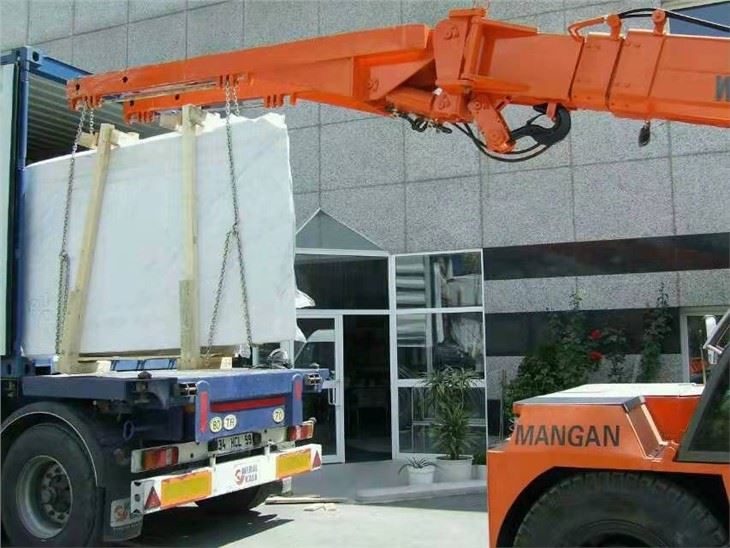
This is where the Telehandler completely changes the game.
The real "magic trick" here is the horizontal reach. Unlike a standard forklift that has to drive into the container to drop a load, a telehandler just stays parked right outside the door. You simply extend the telescopic boom, and it slides the goods all the way to the back of the container with pinpoint accuracy. It's faster, it's easier, and most importantly, you aren't constantly worried about scratching up the cargo or the container walls.
We all know that fitting heavy gear into those narrow containers is a game of inches. One wrong move and you've got a costly insurance claim on your hands. That's why the "fine-tuning" on a modern telescopic boom is such a lifesaver. These machines aren't just about raw power; they have the "soft touch" needed to tilt and shimmy a load into exactly the right spot. The control systems today are so smooth that handling a piece of high-precision machinery feels as steady as moving a pallet of bricks.
But the best part? These machines aren't one-trick ponies. They're more like the "Swiss Army Knife" of the logistics world. Whether you're working a rugged dock or a high-tech warehouse, they bridge the gap perfectly. With a quick-change system, you can swap out the forks for a hook or a specialized clamp in no time. Instead of buying three different machines for three different jobs, you just use one telehandler. It's a smarter way to work, it keeps your overhead low, and it keeps the workflow moving.
At the end of the day, whether you're at a massive international port or a local factory, having the right gear is what keeps you competitive. Switching to a telescopic boom isn't just a technical upgrade-it's about making the "impossible" loads feel like just another day at the office.


