


As a multi-functional logistics loading and unloading equipment integrating loading, unloading, handling, stacking, and high-level operations, telescopic boom forklifts are widely used in construction sites, industrial plants, agricultural ranches, port logistics, and stone processing. Because these machines often operate under heavy loads and high frequency, standardized daily inspections not only affect their working efficiency but also directly impact their lifespan and operational safety.
As a professional telescopic boom forklift manufacturer, we have accumulated extensive firsthand experience in equipment maintenance through long-term technical support to our customers.
In fact, many small problems affecting operations often accumulate from easily overlooked details. Spending just a few minutes each day on routine checks can effectively prevent them from escalating into bigger problems. Therefore, we have specially launched the "Telescopic Boom Forklift Maintenance Series," sharing equipment maintenance experience based on actual working conditions. In this installment, we'll start with the most basic and crucial aspect: "daily inspections."
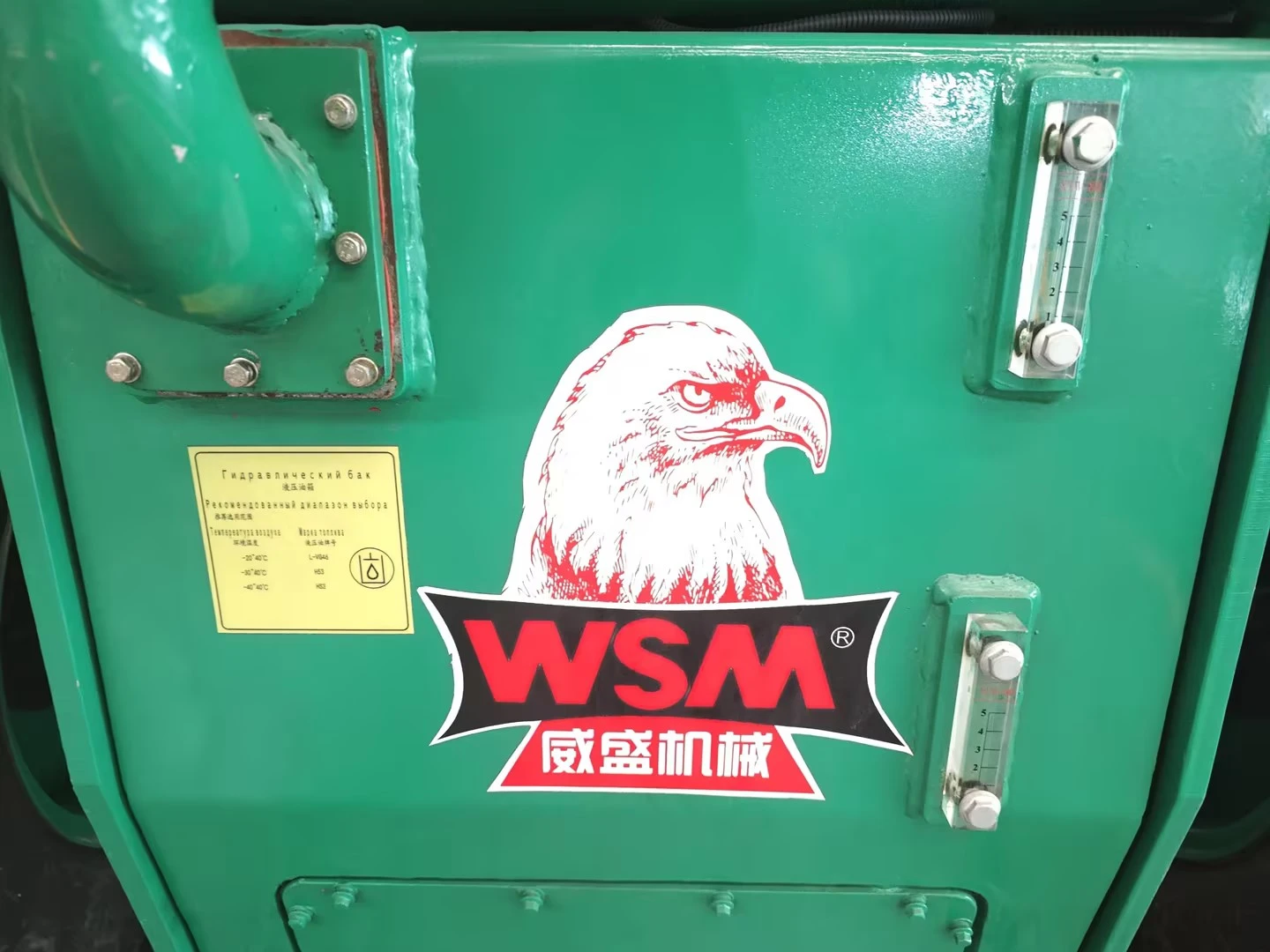
Hydraulic System Inspection: Ensuring Stable and Smooth Operation
The hydraulic system is the core power source of the telescopic boom forklift, responsible for lifting, extending, and tilting movements. Before daily operation, the following should be checked:
- Hydraulic oil level: Is it within the normal range?
- Hydraulic oil color: Is it normal, without emulsification, deterioration, or contamination?
- Check hydraulic lines and joints for leaks or seepage.
Insufficient or contaminated hydraulic oil can lead to sluggish operation, jamming, and even abnormal wear of hydraulic components. In addition, check hydraulic lines and joints for leaks or seepage, especially the oil lines inside the telescopic boom's moving parts, which should be closely monitored after prolonged operation.
Tire Inspection: A Crucial Factor Affecting Stability and Safety
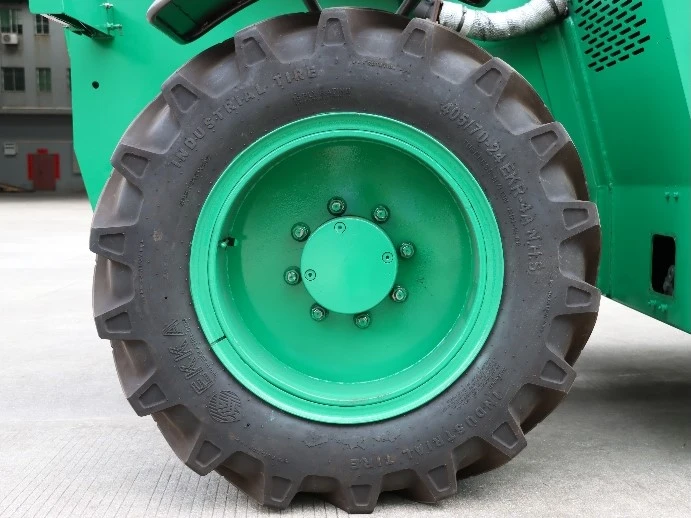
Tires are the only part of the machine in contact with the ground, and their condition directly determines driving smoothness and load-bearing safety. Routine inspections should observe:
- For abnormal wear, cuts, cracks, or bulges in the tire tread; whether the tread depth exceeds the safety line.
- Whether the tire pressure is within the standard range.
- For any signs of loose bolts.
For equipment operating on complex surfaces such as gravel pits, construction sites, or stone processing plants, embedded gravel or metal objects should be promptly removed from the tire treads to prevent accidental punctures.
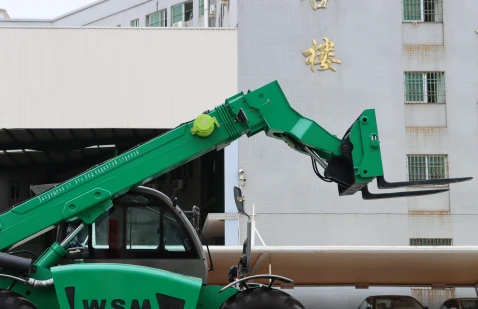
Telescopic Boom Inspection: Core Load-Bearing Components Cannot Be Neglected
The telescopic boom is the core load-bearing structure of a telescopic forklift, and extra attention must be paid during inspection:
- For obvious deformation of the boom;
- For cracks at the welds;
- For looseness of pins and connections;
- For severe wear of the slider and guide mechanism.
In addition, dirt and sand adhering to the boom surface should be cleaned regularly. Failure to remove these debris promptly will not only affect the smoothness of extension and retraction but also accelerate component wear.
Engine and Cooling System Inspection: Ensuring Continuous Power Output
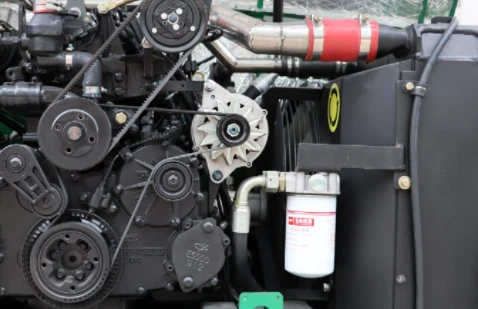
For diesel-powered telescopic boom forklifts, the engine is the primary power source. Before daily operation, it is recommended to check the following:
- Engine oil level and pressure within the normal range;
- Coolant level and leak-free;
- Air filter needs cleaning or replacement;
- Radiator surface is free of excessive dust, which can impair heat dissipation.
Especially in high summer temperatures or under continuous heavy loads, it is crucial to ensure the cooling system functions effectively. Failure to do so can easily lead to engine overheating and subsequent downtime.
Safety Device Inspection: Details Determine Safety
Besides the power system and operating mechanism, safety devices are equally important. Take a minute each day to check:
- Are the lights and warning lights on and off properly, and is the brightness appropriate?
- Is the horn clear?
- Are the rearview mirrors clean and providing a clear view?
- Are there any abnormal alarms on the instrument panel?
These seemingly simple checks are all closely related to the safety of personnel and equipment on site.
Routine inspections are the first step to efficient equipment operation.
For telescopic boom forklifts, routine inspections are not complicated, but they are an indispensable part of equipment management. Spending a few minutes each day on routine checks to promptly identify and address minor issues is the simplest and most effective way to avoid unplanned downtime.
As a company specializing in the research and development and manufacturing of material handling equipment, Weisheng Machine consistently adheres to strict quality control at every stage, from product design and component selection to complete machine assembly and testing. Every telescopic boom forklift undergoes multiple inspections before leaving the factory, including overall machine debugging, functional testing, load testing, and road testing, ensuring the equipment is delivered to customers in excellent condition.
We firmly believe that reliable equipment performance stems from both rigorous quality control before shipment and scientific and standardized daily maintenance on-site. Daily routine inspections are equally essential for maintaining continuous high efficiency. We hope this content will help you better manage your equipment and improve operational efficiency. What other easily overlooked issues have you encountered during daily inspections? Feel free to contact us.
Next Issue Preview: "Telescopic Boom Forklift Maintenance Series (Part Two): Key Points of Hydraulic System Maintenance" How often should hydraulic oil be changed? What are the dangers of excessively high hydraulic oil temperature? How to reduce the failure rate of hydraulic systems? In the next issue, we will provide a detailed introduction to hydraulic system maintenance. Stay tuned.


