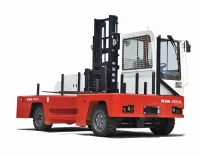
Hey there! As a wheel loader supplier, I often get asked about the fuel consumption rates of these powerful machines. It's a crucial topic, especially for those in the construction, agriculture, and other industries that rely on wheel loaders for their day - to - day operations. So, let's dive right in and explore this subject.
First off, what exactly affects the fuel consumption of wheel loaders? Well, there are quite a few factors. The size and type of the wheel loader play a huge role. Larger wheel loaders generally have bigger engines, which means they'll burn more fuel. For instance, a large - scale industrial wheel loader used in a mining operation will consume significantly more fuel than a smaller one used for light - duty tasks like moving gravel in a small construction site.
The engine technology also matters a great deal. Newer engines are designed to be more fuel - efficient. They use advanced fuel injection systems, better combustion chambers, and other technologies to get the most out of every drop of fuel. For example, some modern wheel loaders come with engines that can adjust their power output based on the load they're carrying. When the loader is not under heavy load, the engine can run at a lower power setting, thus saving fuel.
The working conditions are another major factor. If a wheel loader is operating on rough terrain, it has to work harder to move around. This increased effort means more fuel is needed. Similarly, if the loader is constantly starting and stopping, like in a busy construction site where it's loading and unloading materials frequently, the fuel consumption will be higher compared to a situation where it can operate at a steady pace.
Let's talk about some common fuel consumption rates. For small wheel loaders, which are often used in landscaping, small - scale construction, or agricultural tasks, the fuel consumption can range from about 3 to 6 gallons per hour. These smaller machines usually have engines with lower horsepower, so they don't need as much fuel to operate.
Medium - sized wheel loaders, which are more commonly used in general construction projects, might consume anywhere from 6 to 12 gallons per hour. These loaders have more power and are capable of handling larger loads, so their fuel consumption is higher.
Large wheel loaders, such as those used in mining or large - scale earth - moving projects, can consume 12 gallons or more per hour. Their massive engines are designed to handle extremely heavy loads, and this requires a significant amount of fuel.
Now, as a supplier, I know that fuel efficiency is a top priority for many of our customers. That's why we offer a wide range of wheel loaders with different fuel - saving features. For example, some of our loaders come with automatic idle shutdown systems. If the loader is idle for a certain period of time, the engine will automatically shut off to save fuel.
We also have models with advanced hydraulic systems. These systems are designed to use less energy while still providing the same level of performance. This means that the loader can operate more efficiently and use less fuel in the process.
When it comes to choosing the right wheel loader for your needs, it's important to consider the fuel consumption rate along with other factors like the loader's capacity, the type of work it will be doing, and your budget. You don't want to end up with a loader that's too big for your tasks and burns a lot of fuel unnecessarily, but you also don't want one that's too small and can't handle the workload.
If you're interested in exploring different types of wheel loaders, you can check out some of our great options. We have a variety of Wheel Bucket Loader Brands that offer different features and fuel - efficiency levels. Our Small Euro V Loader is a great choice for those who need a compact and fuel - efficient machine for light - duty tasks. And if you're looking for a multi - purpose machine, our Wheel Loader Multifunction Forklifts Agricultural Construction Machinery might be just what you need.
In addition to the factors I've mentioned, proper maintenance of the wheel loader can also have a big impact on fuel consumption. Regularly changing the air filters, checking the tire pressure, and ensuring that the engine is tuned up can all help the loader run more efficiently and use less fuel. A dirty air filter can restrict the airflow to the engine, which can cause it to work harder and burn more fuel. Similarly, under - inflated tires can increase the rolling resistance, making the loader use more energy to move.
Another thing to keep in mind is the operator's skills. A skilled operator knows how to handle the loader in a way that maximizes fuel efficiency. They can avoid unnecessary acceleration and braking, and they can use the loader's features, like the power - saving modes, to their advantage. We offer training programs for our customers' operators to help them get the most out of our wheel loaders in terms of both performance and fuel efficiency.
So, if you're in the market for a wheel loader, don't just focus on the initial purchase price. Consider the long - term fuel costs as well. A more fuel - efficient loader might cost a bit more upfront, but it can save you a significant amount of money in the long run.
If you have any questions about our wheel loaders, their fuel consumption rates, or anything else related to these machines, don't hesitate to reach out. We're here to help you find the perfect wheel loader for your needs. Whether you're a small - business owner looking for a compact loader or a large - scale construction company in need of a heavy - duty machine, we've got you covered. Contact us today to start the conversation about your wheel loader requirements. We're eager to work with you and provide you with the best wheel loader solutions.
References


- Industry reports on construction equipment fuel efficiency
- Manufacturer's specifications for wheel loaders