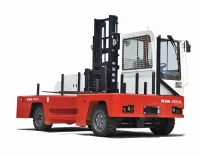
Is it difficult to learn to drive a sand wheel loader? Well, that's a question I get asked a lot as a supplier of these heavy - duty machines. I've seen quite a few folks taking on the challenge of learning to handle a sand wheel loader, and the answer isn't a simple yes or no.
First off, let's talk about what a sand wheel loader is. A sand wheel loader is a type of construction equipment specifically designed for moving and loading sand, as the name suggests. It's quite versatile and can also be used for handling other granular materials and in various construction sites. If you're curious about the kind of sand wheel loaders we offer, check out this Sand Wheel Loader on our website.
When it comes to learning to drive one, there are some factors that make it seem difficult. The controls of a sand wheel loader are different from those of a regular car. For starters, you've got to get used to the joystick - like controls for the bucket and the boom. These controls are used to lift, lower, and tilt the bucket, which is crucial for scooping up sand and depositing it where it needs to go. It takes some practice to get the movements just right. You can't be too rough or too gentle; finding that sweet spot is key.


Another aspect that can make learning a bit of a challenge is the size and maneuverability of the machine. Sand wheel loaders are big and bulky. They have a large turning radius, and you need to be very aware of your surroundings when operating them. You don't want to accidentally bump into things or cause any damage. It's like trying to park a tank in a tight space—it requires a lot of patience and precision. And let's not forget about visibility. The large size of the loader can sometimes block your view, especially when you're trying to reverse or navigate in a crowded area.
However, it's not all doom and gloom. There are plenty of reasons why learning to drive a sand wheel loader isn't as hard as it might seem at first. One of the big advantages is that modern sand wheel loaders are designed with user - friendliness in mind. Manufacturers have made great strides in making the controls more intuitive and easy to understand. You don't have to be a rocket scientist to figure out how to operate them.
Also, there are training programs available. Most of the suppliers, including us, offer some form of training for new operators. These programs are designed to teach you everything from the basics of starting the machine to advanced maneuvers. They usually include both classroom instruction and hands - on practice. With proper training, you can learn the ropes in a relatively short period of time.
Let's take a look at some of the early experiences that many new operators share. When they first sit in the driver's seat of a sand wheel loader, it can be a bit intimidating. The sheer size of the machine and the complex controls can make them feel like they're in over their heads. But as they start to get a feel for the machine, those initial jitters start to fade away.
One of the first things new operators learn is how to start and stop the loader safely. Sounds simple, right? But there are specific procedures that need to be followed. Once they've got that down, they move on to learning how to control the movement of the machine. This includes forward, reverse, and turning. The first few attempts at turning the loader can be a bit wobbly, but with practice, it becomes second nature.
Next up is the operation of the bucket and the boom. As I mentioned earlier, this is where the real skill comes in. New operators often find it difficult to coordinate the movements of the bucket to scoop up the right amount of sand without spilling it everywhere. But with time and patience, they start to develop the muscle memory needed to make smooth and accurate movements.
Now, let's compare the sand wheel loader with other types of loaders. For example, the Mill Wheel Loader. A mill wheel loader is typically used in industrial settings, such as mills. It has a different set of requirements and features compared to a sand wheel loader. The controls might be similar in some ways, but the way they're used can vary. A mill wheel loader might need to be more precise when handling heavy and large - sized materials, whereas a sand wheel loader focuses more on quick and efficient loading of granular materials.
Another interesting loader is the Container Rotating Loader Flip Forklift. This machine is designed for handling containers and has a unique rotating feature. Learning to operate this loader requires a different set of skills compared to a sand wheel loader. The rotating mechanism adds an extra layer of complexity, but it also offers more versatility in certain applications.
So, is it difficult to learn to drive a sand wheel loader? It really depends on the individual. If you're someone who's mechanically inclined and has a good sense of spatial awareness, you might find it easier to pick up the skills. On the other hand, if you're not used to operating heavy machinery, it might take a bit more time and effort. But with the right training and a willingness to learn, anyone can become a proficient sand wheel loader operator.
If you're in the market for a sand wheel loader, or you're interested in learning more about our products and training programs, don't hesitate to reach out. We're here to help you make the right choice and get you started on your journey as a sand wheel loader operator. Whether you're a small - scale contractor or a large construction company, we've got the right equipment for your needs.
References
- Industry reports on construction equipment operation
- Manufacturer's manuals for sand wheel loaders