

As a supplier of Diesel Forklifts, I often receive inquiries from customers regarding the suitability of diesel forklifts for use on uneven ground. This is a critical question, as the working environment can significantly impact the performance, safety, and longevity of the forklift. In this blog, I will delve into the factors that determine whether a diesel forklift can be used on uneven ground, the advantages and limitations, and alternative solutions when necessary.
Understanding Diesel Forklifts
Diesel forklifts are known for their robustness, power, and high load - carrying capacity. They are commonly used in industrial settings such as warehouses, construction sites, and ports. Powered by diesel engines, these forklifts offer strong acceleration and can handle heavy loads efficiently. However, their design and capabilities vary depending on the model and intended use.
The standard diesel forklifts are typically designed for relatively flat and smooth surfaces. They are optimized for indoor or outdoor operations on well - maintained floors or paved areas. These forklifts usually have a lower ground clearance and are not equipped to handle large bumps, potholes, or steep inclines.
Factors Affecting the Use of Diesel Forklifts on Uneven Ground
1. Ground Clearance
Ground clearance is the distance between the lowest part of the forklift chassis and the ground. On uneven ground, a forklift needs sufficient ground clearance to avoid scraping the chassis or getting stuck on obstacles. Standard diesel forklifts may have a ground clearance of only a few inches, which is adequate for flat surfaces but may not be enough for rough terrain. Forklifts with higher ground clearance can navigate over rocks, debris, and uneven surfaces more effectively.
2. Tire Type and Traction
The type of tires on a forklift plays a crucial role in its performance on uneven ground. Standard diesel forklifts often come with pneumatic or cushion tires. Pneumatic tires are filled with air and offer better shock absorption and traction compared to cushion tires. However, even among pneumatic tires, there are differences. For uneven ground, tires with deeper treads are more suitable as they provide better grip on loose or slippery surfaces. Traction is essential to prevent the forklift from skidding or tipping over, especially when carrying heavy loads.

3. Suspension System
A good suspension system can help the forklift adapt to uneven ground. It allows the wheels to maintain better contact with the surface, improving stability and handling. Some standard diesel forklifts may have a basic suspension system, but for use on rough terrain, a more advanced suspension is required. Forklifts with a well - designed suspension can reduce the impact of bumps and vibrations on the operator and the load.
4. Stability
Stability is a major concern when using a forklift on uneven ground. The center of gravity of the forklift and the load it is carrying can shift significantly on uneven surfaces, increasing the risk of tipping over. Factors such as the height of the load, the weight distribution, and the angle of the ground all affect the stability of the forklift. Diesel forklifts need to be designed with proper counterweights and a stable base to ensure safe operation on uneven ground.
Advantages of Using Diesel Forklifts on Uneven Ground
1. Power and Performance
Diesel engines are known for their high torque and power output. This makes diesel forklifts well - suited for handling heavy loads on uneven ground. The strong engine can provide the necessary power to climb slopes, overcome obstacles, and move heavy materials efficiently.
2. Durability
Diesel forklifts are generally built to be more durable than their electric counterparts. They can withstand the rigors of rough terrain and harsh working conditions. The robust construction of diesel forklifts makes them less likely to break down when used on uneven ground.
3. Fuel Availability
Diesel fuel is widely available, which is an advantage in outdoor and remote locations where charging stations for electric forklifts may not be accessible. This means that diesel forklifts can operate continuously without the need for frequent charging, making them suitable for long - term use on uneven ground.
Limitations of Using Diesel Forklifts on Uneven Ground
1. Safety Risks
As mentioned earlier, the risk of tipping over is a significant concern when using a diesel forklift on uneven ground. If the forklift is not properly designed or operated, it can lead to serious accidents, causing damage to the equipment, the load, and potentially harming the operator.
2. Wear and Tear
Operating a diesel forklift on uneven ground can cause increased wear and tear on the tires, suspension system, and other components. The constant impact of bumps and vibrations can lead to premature failure of parts, increasing maintenance costs and downtime.
3. Limited Maneuverability
Standard diesel forklifts may have limited maneuverability on uneven ground. The rough terrain can make it difficult to turn, reverse, or position the forklift accurately, which can affect the efficiency of the operation.
Alternative Solutions
If the uneven ground is too rough for a standard diesel forklift, there are alternative solutions available.
1. Rough Terrain Forklift
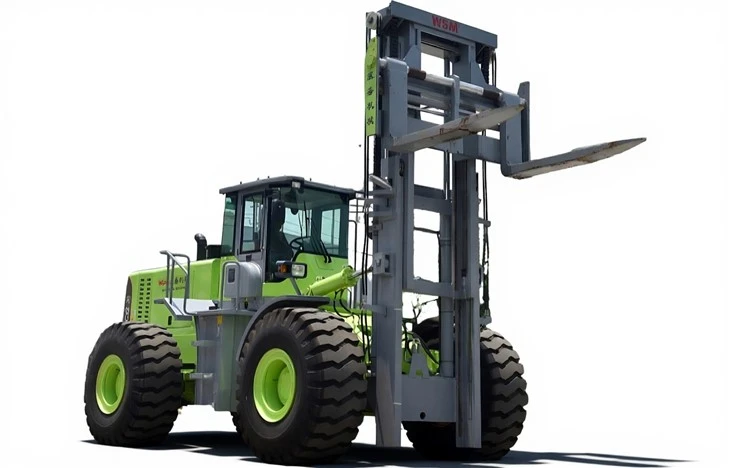
A Rough Terrain Forklift is specifically designed for use on uneven and challenging terrain. These forklifts have a higher ground clearance, larger and more robust tires, and a more advanced suspension system. They can handle slopes, mud, gravel, and other rough surfaces with ease. Rough terrain forklifts are ideal for construction sites, forestry, and outdoor warehouses.
2. Heavy Duty Forklift
For very heavy loads on uneven ground, a Heavy Duty Forklift may be a better option. These forklifts are designed to carry extremely heavy loads and are often built with reinforced frames and powerful engines. They also have features that enhance stability on uneven surfaces.
Conclusion and Call to Action
In conclusion, while standard diesel forklifts can be used on mildly uneven ground under certain conditions, they have limitations. Factors such as ground clearance, tire type, suspension system, and stability need to be carefully considered. If the terrain is too rough, alternative solutions like rough terrain forklifts or heavy - duty forklifts may be more appropriate.
As a Diesel Forklift supplier, we offer a wide range of Diesel Forklifts suitable for different working environments, as well as rough terrain and heavy - duty forklifts. If you are unsure which type of forklift is best for your needs, especially if you have uneven ground to work on, we are here to help. Contact us to discuss your specific requirements and our experts will assist you in making the right choice. Let's work together to ensure your material handling operations are safe, efficient, and productive.
References
- "Forklift Operator's Manual", Various Manufacturers
- "Industrial Material Handling Equipment Handbook", Industry Publications
- "Safety Guidelines for Forklift Operations on Different Terrains", Occupational Safety and Health Publications


